Translate

A recent initiative : French lighthouses protection

Le phare du Grand Jardin en août 2008
The lighthouse of Grand Jardin

Since a few years in France, the Ministry of Culture and Communication launched a campaign of lighthouses protection on all the French coasts. Most lighthouses were classified or registered ont the Historic Monuments list.
Selection criteria which preside over the protection are archaeological, architectural, historic, or ethnological. Untill the end of 2000s, 130 French lighthouses were manifestly under represented within the corpus of historic monuments.

A rigorous scientific inventory work in partnership with the ministry of the sea identified lighthouses which presented the biggest cultural interest to get a protection in Historic Monuments.
So, in Brittany, are concerned 10 operational and 3 decommissioned lighthouses. For example, the lighthouse of « Grand Jardin » is situated near Saint-Malo, in the estuary of the Rance on Channel. Being more 30 meters in height, it was built in 1865 and it was restored after the Second World War. Since october 2012, it’s classified on the Historic Monuments list.

I am a proponent of lighthouses preservation. Firstly, lighthouse belong to the navigation history. Indeed, it is visual landmark to help sailors on the sea. Secondly, lighthouse is worthy of interest  because it's symbolic building in maritime landscape and it's a fascinating technical building created to resist at storms.

To consult synthesis of lighthouses protected in Brittany, click here :

Memory of European ports


« Mémoire des ports d’Europe » is a competition dedicated to the maritime heritage which was organized in 2012 by the Chasse Marée, a specialized magazine. This magazine was created in 1981 to save, promote and transmit maritime culture. For almost 30 years, it organized competitions which  have contributed to a better fame of maritime heritage. 
« Mémoire des ports d’Europe » mobilized several partners : Brittany, the Maritime Heritage Foundation (created in France in 1992), the Regional Federation for Culture and Brittany’s Maritime Heritage.
The competition aimed at encouraging all European harbour cities to inventory their maritime heritage, to protect sites and historic buildings, to collect memories and local know-how, to make traditional boats welcome. The main purpose was to incite actors to reveal a specific heritage in every harbour.
The first prize was attributed to the peninsula of Giens and several prizes were also awarded to other entrants. Giens is an exceptional site where is situated Olbia, a former greek city of the IVth century BC. Giens shelters ancient ship wrecks, for example the Madrague. In Giens, there is a tower named « La Tour Fondue ». It was built to combat the piracy. Giens is also a natural patrimonial site, with the lagoon of Pesquiers. The peninsula’s development is more and more thought at local level in dialogue between the political officers, the inhabitants and the institutions of heritage preservation. Maritime heritage requires that all society pays attention to historic monuments and artefacts not to disappear on the pretext of modernization or safety. Nowadays, the maritime heritage conservation and transmission stays a non achieved task.

Introducing a famous museum dedicated to Dutch maritime heritage


Photography of Dutch maritime heritage

Because of the great importance of the sea in their history, some European cities decided to organize a museum dedicated to the link between the sea and the human and economic growth of the city.

Amsterdam, the Dutch capital, is in this case. I visited the Nederlands Scheepvaartmuseum, or Dutch National Maritime Museum in English, last year. The name of the museum is not really adapted to the collections because the main part of items is linked to Amsterdam.

The Nederlands Scheepvaartmuseum is situated near the Amsterdam Central Station. Collections take place since the opening, in 1973, in a former national naval warehouse, built more than three hundred and fifty years ago, in 1656.

The port of Amsterdam is important in Europe : it’s the fourth fret port after ports of Rotterdam, Antwerp and Hamburg. Moreover, an interesting room in the museum presents the trip of goods from the cargo to the store. People are placed in a 360°-view as a container during the entry of the cargo in the port, unloading, the trip between different terminals, loading on trucks…

In the next room, a big model representing the today’s port of Amsterdam. It’s really vast nowadays, whereas the historic port was smaller, because of the growth of fret traffic.

But the most interesting rooms of the museum are dedicated to old items used during XVIth and XVIIe Centuries, when The Netherlands was one of the most powerful countries in Europe. Lots of globes permit us to understand how navigators saw the world at this time, and we can remark that globes changed with frequent discoveries.
We can also see some navigation tools like azimuth compasses, sextants, quartermaster’s whistles. Some old maps are visible just next to these items.

Others rooms present old paintings that represent old Amsterdam’s port, or naval war scenes. These paintings prove that former societies were curious and fascinated by maritime activities, especially when the world has been enlarged after the discovery of America. For us, paintings are precious to complete our knowledge of old boats and old navigation methods.

Indeed, painting can be at the root of conception of vessel models that are numerous in the museum. The most important model is called Amsterdam. His size ? Almost fifty meters ! This model is, in fact, the reconstitution of a real vessel used by the Dutch East India Company just for a few months between 1748 and 1749, before a tragic shipwreck on the bank of Bulverhythe (near Hastings) because of the crew’s mutiny.
The new Amsterdam is alongside just behind the museum. It’s a really good idea because people can embark on the vessel, visit the different decks, from the hold with false food, merchandises and… rats, to the main deck. The top of the visit is the captain’s cabin, that is really more comfortable in comparison with little bunks reserved to the crew. This vessel will never sail around the world, but the Amsterdam can make it clear to us that life on board was really hard, with many particular tasks to do for crew.

The only one problem of the museum is the ticket price: fifteen euro for a three-hour visit. Collections are beautiful, but I’m sure that that price can incite some people, foreign tourists in particular, not to visit the museum.

Next summer, I may go to Antwerp just for a few days. If I do, I will visit the new municipal museum, that retraces the five last centuries of the city’s history, obviously connected to the sea : the museum was built in front of the Napoleon dock !

Official website is: http://www.hetscheepvaartmuseum.nl/

Between archeology, science and archival : the conservation of the Titanic’s artefacts


The Titanic was a passenger liner that sank in the North Atlantic Ocean more than a century ago, on 15 April 1912. The collision with an iceberg is the reason of the shipwreck, that is really famous because it should have been the first of many crossings between Southampton, UK to New York City, US. The sinking of Titanic killed about 1,500 people.

In this video report directed by CNN, several artefacts are shown to us. They were not recovered from inside the ship wreck, but from the debris field composed of artefacts that went out from the Titanic when she cracked open.

David Galusha is the chief textile conservator for Titanic’s artefacts. He explains to the journalist what sort of artefacts were recovered from the debris field and why. The ship wreck was located in 1985, so seventy-three years after she collided with the iceberg.

David Galusha says that the bottom of the ocean is a “pristine environment”, because there is no light, the water is fresh and salted. These conditions are good for the conservation of artefacts in leather. We can see several parts of leather belts, a suitcase, because of the tanning of leather that permit a good conservation in cold and salted water : it prevents deterioration.
After the recovery of leather artefacts, a important task must be done to create individual archives for each of those ones. Photos, localization of artefact before the recovery, date of the recovery. And when that task has been done, artefacts must be conserved in a full o sea water container. Indeed, as artefacts stayed in the ocean for decades, the most efficient way to protect those ones is to recreate the same environment to keep the bacteriologic balance.

Conservation of pieces of paper follows the same way : Alex Klingelhofer, who is the vice president of collections, says to the journalist that pieces of paper must be kept wet to avoid disintegration happening. It’s really important to take care of paper documents like books or playing cards, because she says that scientists didn’t think that they will recover these so fragile artefacts after decade in salt water.

In case of exhibition, specialists take lots of photos and compare with elder photos to see the eventual evolution of artefacts. If there is a problem, the artefact is removed to be treated. The perpetual control of the evolution of different materials is indispensable to conserve those ones in the better possible state.

For some people, the recovery of Titanic’s artefacts is a bad thing. Indeed, they think that is like a theft whereas the ship wreck and debris field must be considered as a sanctuary dedicated to the 1,500 victims. We can see several comments of YouTube members about that polemical debate.  

In my opinion, trying to preserve all Titanic’s artefacts or most of them is an illusion.
I’m in favour of the preservation of some symbolic artefacts because it requires a special treatment to be protected. Our duty is to proceed to a relevant selection of artefacts as medium for transferring collective memory from one generation to another.


Legal protection of Titanic

To read this article in french only, click here :

Jean-Paul Pancracio, a maritime legislation specialist, redacted an article that refers to the legal protection of Titanic. It mentions the American jurisdiction intervention for regulating the enlevement of artefacts removal of Titanic's ship wreck. In 2002, the Supreme Court of the United States refused definitively the property right of the society RMS Titanic on these artefacts.
So, the society RMS Titanic can only conserve artefacts recovered from inside the ship wreck but this society can not be the owner of these.

The case of Titanic is interesting because it has opened the way of the UNESCO’s convention on Protection of the Underwater Cultural Heritage and more particularly on the conservation of artefacts on the spot, like the underwater archeological sites.
The 2004 international agreement between the United States, Canada, the United Kingdom and France qualifies the Titanic’s wreck site of " international maritime memorial ". This agreement submits diving to an authorization.

I think that limiting the exploration’s rights on the ship wreck of Titanic is a good decision to combat commodification of maritime heritage. It’s a necessary measure to prevent artefacts dispersion and consequently Titanic’s cultural heritage dissemination.
To my mind, the Titanic's wreck and submerged artefacts belong to the 1,500 people that died in 1912. Many artefacts have already been recovered, many submarines have already visited the wreck site. Today, time is not to new researches yet, but to the respect of the so numerous victims. Furthermore, regulation is effective to limit accidents. TheTitanic is really damaged because of corrosion, and every new submarine diving could accelerate the destruction of the wreck.


 Titanic Belfast

Enhancement of heritage can contribute at the revitalization  of territories.
So, in 2012 the Titanic Belfast was inaugurated. The Titanic Belfast is situated in the disappeared shipyards, on the slipways where the Titanic liner was built. It's a store dedicated to the Titanic’s story since its construction to its wreck.
Titanic embodies high level technical building carried out by the industrial society. It symbolizes exceptional capacities deployed in the shipbuilding at the beginning of the XXth century. It’s a justifiable reason to transmit the Titanic’s story by insisting on the human side.

The Titanic Belfast is an ambitious project which cost 117, 000, 000 euro !
Nowdays, Belfast’s past is used to stimulate its own development. The Titanic Belfast isn’t a traditional museum because it doesn’t expose relics of past. Indeed, it’s an active interactive adventure which invites visitors to relive the Titanic’s legend by special effects and 3D experiments. The Titanic Belfast is also a sensitive experience because the grand staircase and the cabins in the Titanic was recreated so that visitors feel in the authentic liner.
The Titanic Belfast is a way to attract in Belfast and in the North of Ireland many visitors of the whole world. Maritime heritage can be a pretext to increase attraction of a city. Here, tourism promotes and protects culture without detriment to the underwater cultural heritage remains.

In my opinion, it’s a good idea to offer new learning supports to tourists. Indeed, the traditional model of a museum is, for some people, a little bit boring. I think that electronic and interactive technologies can involve people more than traditional exhibition rooms. Nowadays, to visit a cultural place should be as entertaining as a show, but as instructive as a classic museum in the same time. Former museums are trying to adapt their collections to new technologies, but it’s difficult to reinvent Le Louvre or the British Museum. Here in Belfast, it’s really easier to create an adapted museum to these new technologies, new cultural conceptions, because the building was purpose-built in this goal

Preservation of wreck sites and the website English heritage


Preservation of wreck sites


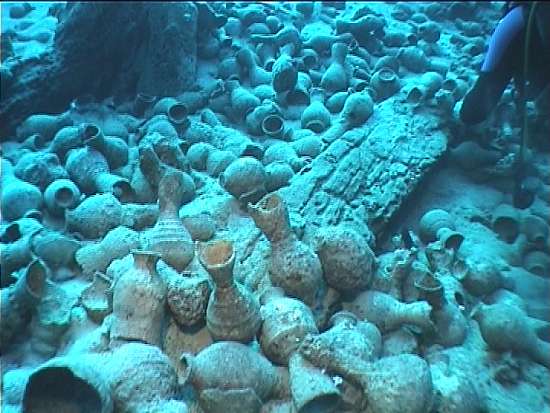
 Ceramic artefacs photography, the cargo of a shipwreck found in the North of Safaga ( Egypt)

England was precursory in conservation of submarine cultural heritage. The seas and shores around Britain contain an immense wealth of archaeological remains from shipwrecks submerged. Since 1973 The Protection of Wrecks Act regulates the dive on historic wrecks in English waters. The British Protection of Military Remains Act (1986) also restricts access to wrecks which are sensitive as war graves. In some cases this act creates a blanket ban on all diving. Currently England has 46 wreck sites which are protected. They range from Bronze Age cargoes to early 20th century submarines.

Nowdays, most countries protect their submarine cultural heritage because wreck sites are precious to understand the past. For example, in France, this protection is assured by the law relative to the maritime cultural property of 1989. This law defines that remains are declared as a maritime cultural property at the end of hundred years.

Since 2001, the UNESCO convention, Protection of the Underwater Cultural Heritage aims at giving the international community’s reponse to the increasing looting and destruction of underwater cultural heritage. It aims at proposing an international legal framework to help countries to improve the protection of underwater cultural heritage and the facilitation of international cooperation on this subject. But it doesn’t change sovereignty rights of States or regulate the owership of wrecks sites.


The website English heritage


The website English Heritage proposes 3 ways of browsing.

1. Web surfers can learn the history of ship wrecks that lie off Britain’s shores.
A map of wreck sites designated in United Kingdom is available on line.
Internet users can click on the landmarks on this map to know the informations of every wreck site. Sometimes, original experiments have been created.
For example, the wreck of VOC ship Amterdam is pervious live with webcam. However itself will only be visible at spring low tides during daylight hours.

2. Web surfers can find out how historic wrecks are protected by the government.
Anyone can apply for a licence to dive on designated wreck sites.
The location of the wreck site is legally identified and a restricted area ensures the protection of it. 

3. Web surfers can access different online downloadable forms : to request a licence to visit a historic wreck in English waters, a licence to carry out an excavation, a licence to recover artefacts from a protected wreck site, an amendment to apply for a time extension of any existing wreck licence, or to renew an existing licence.
English Heritage consideres applications and decides whether or not a licence should be granted. Then it referres them to the Secretary of State for Culture, Media and Sport. English Heritage may also recommend that certain conditions are attached.

A look around Sweden's 'Mary Rose'


It's a documentary about the restoration of Mary Rose, a famous war ship of English king Henri VIII who sank in 1545, and remained on the seabed until 1982.
The journalist of BBC News Channel Robert Hall travelled to Sweden to speak to Fred Hocker, Director of Research at Vasa Museum, about the procedures used to treat and protect historic ships as the Vasa in 1961.So the Vasa was filmed here. (Vasa is one of the oldest and best-preserved ships salvaged in the world, owing to the cool temperatures and low salinity of the Baltic Sea).


Transcription of this video extract :


- The Mary Rose and Vasa projects have been linked for a long time.
The two big shipwreck recovery projects seen in history maritime archeology, the two big successful ones. And… because Mary Rose came along almost exactly a generation after Vasa in terms of the salvage and its conservation. The Mary Rose project could benefit from the lessons learnt by doing the Vasa project.

They also took a different approach to the excavation phase. Vasa was four years of preparations and salvage followed by five months of excavation.
Mary Rose was very much the opposite ; it was more than a decade of excavation followed by the salvage. But it also means that when we encounter problems here with Vasa, what we discovered in that process can be applied to Mary Rose in advance, they don’t have to suffer the consequences of the mistakes that we made. On Mary Rose, it will be easier to mitigate the consequences of the conservation process than there were with Vasa because we… when Vasa was conserved nobody knew with the consequences were going to be. No one actually knew that the treatment would work or how thing I would resolve. Now we know how the strict kind of treatment works.

Mary Rose has been able to develop a much more sophisticated version of that which would be much more effective. It has to get rid of the water that was part to the conservation treatment and leave the polyethylene glycol behind and unavoidably there will be some shrinkage of the timbers. We’ve had about six percent shrinkage across the grain and on average but it varies quite a lot. What Mary Rose will probably see is on average much less shrinkage and I will suspect much less variation in shrinkage much more even response to the treatment. They’ve been able to tailor that treatment very carefully to the state of preservation of the ship.

- So the story doesn’t end either here or in Portsmouth.

- No there is no end, that there are just [mot manquant] so long the way, and some of [mots manquants], when the hot box comes down, people can actually see the entire ship, they want for be a great moment be a great moment, but there will always be new challenges. We’ve only been treating ships this way, waterlogged wood for fifty years. And so we only know what the first fifty years have consequences of long-term indications as the hours.
Another fifty years… Other things who are going to happen that we can’t imagine now, as you have to be prepared for that, we have to have people looking after the ship constantly.
We have the same tendence. In addition to that, eternal responsibility, there’s eternal opportunity. There’s a chance to ask new questions all the time.
The things that we want to know today about the XVIIth Century as we know the XVIth Century in England may not be the things that our children want to know, our grandchildren want to know, as long as the ship is there and it’s properly looked after.
There’s always that opportunity: ask new questions, learn new things about that period.

Oostende voor Anker


Myself at the Festival of navigation and maritime heritage Oostende voor anker - 2012

Oostende voor Anker is an annual event that takes place every spring in Ostend, an important Belgian port. The fifteenth edition is going to occur from Thursday, May 29th to Sunday, June 1st 2014. It has been inspired by La Grande Armada, one of the biggest meeting of old boats in the world, created in Rouen in 1989.

I went to Ostend a couple of years ago, in 2012, so I can say that Oostende voor Anker is a real beautiful event about maritime heritage.

Indeed, this port has an important history in Europe. Some little typical boats are present to remind people of the main reason Ostend was founded : fishing. People can eat some kippers thanks to local cookers. If you are not really tempted to eat this particular meal, you can spend your money in buying typical maritime clothes (captain’s cap, pea jacket…) or a souvenir, for example a model boat.

Oostende voor Anker receives old sailing boats from the whole Europe too. The most important part is constituted by Dutch boats, because of the proximity of Netherlands, but above all because Netherlands has always been a powerful country on the sea, from XVIth to XIXth Century in particular. But, in fact, vessels present in Ostend were built during XIXth or XXth Centuries, not in hood but in steel. Indeed, a vessel like the Mercedes was built in 1958. The main goal of this project was to perpetuate methods and technical knowledge in navigation, whereas old vessels couldn’t resist to years’ attacks or have been destroyed.

Furthermore, Oostende voor Anker receives authentic old boats created during XIXth Century. To be more specific, we can qualify these boats of real old steamers. Sometimes, captains make some noise with steam or with their boats' siren to impress the crowd that can hear what was the daily climate in port of Ostend, London or Genoa a hundred and fifty years ago.

This type of event has been taken up by other cities in Europe. In the north half of France, Boulogne-sur-Mer, Calais and Dunkirk organize maritime fests alternatively. The next on is going to take place in Calais in the first decade of June.


To obtain more information on the organization of this event, browse this website : http://www.oostendevooranker.be/nl/visit/presentatie