Preservation of wreck sites
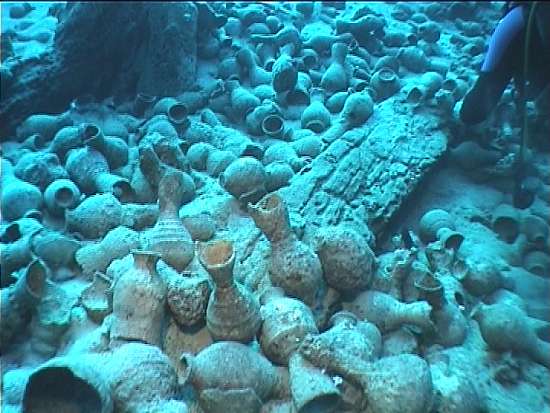 |
| Ceramic artefacs photography, the cargo of a shipwreck found in the North of Safaga ( Egypt) |
England was precursory in conservation of submarine cultural
heritage. The seas and shores around Britain contain an immense wealth of
archaeological remains from shipwrecks submerged. Since 1973 The Protection of Wrecks Act regulates
the dive on historic wrecks in English waters. The British Protection of Military Remains Act (1986) also restricts
access to wrecks which are sensitive as war graves. In some cases this act creates
a blanket ban on all diving. Currently England has 46 wreck sites which are
protected. They range from Bronze Age cargoes to early 20th century submarines.
Nowdays, most countries protect their submarine cultural
heritage because wreck sites are precious to understand the past. For example,
in France, this protection is assured by the law relative to the maritime
cultural property of 1989. This law defines that remains are declared as a
maritime cultural property at the end of hundred years.
Since 2001, the UNESCO convention, Protection of the Underwater Cultural Heritage aims at giving the
international community’s reponse to the increasing looting and destruction of
underwater cultural heritage. It aims at proposing an international legal
framework to help countries to improve the protection of underwater cultural
heritage and the facilitation of international cooperation on this subject. But
it doesn’t change sovereignty rights of States or regulate the owership of
wrecks sites.
The website English heritage

The website English
Heritage proposes 3 ways of browsing.
1. Web surfers can learn the history of ship wrecks that lie
off Britain’s shores.
A map of wreck sites designated in United Kingdom is available
on line.
Internet users can click on the landmarks on this map to
know the informations of every wreck site. Sometimes, original experiments have
been created.
For example, the wreck of VOC ship Amterdam is pervious live
with webcam. However itself will only be visible at spring low tides during
daylight hours.
2. Web surfers can find out how historic wrecks are
protected by the government.
Anyone can apply for a licence to dive on designated wreck
sites.
The location of the wreck site is legally identified and a
restricted area ensures the protection of it.
3. Web surfers can access different online downloadable forms : to request a licence to visit a
historic wreck in English waters, a licence to carry out an excavation, a
licence to recover artefacts from a protected wreck site, an amendment to apply
for a time extension of any existing wreck licence, or to renew an existing
licence.
English Heritage consideres applications and decides whether
or not a licence should be granted. Then it referres them to the Secretary of
State for Culture, Media and Sport. English Heritage may also recommend that
certain conditions are attached.

Aucun commentaire:
Enregistrer un commentaire